How Live Dealer Studios Operate Behind the Scenes: A Complete Guide
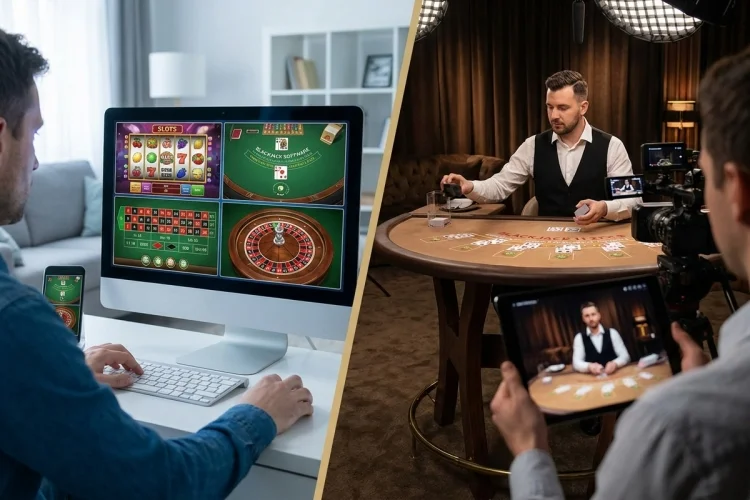
A live blackjack or roulette table may look simple on your screen: a dealer, some cards or a wheel, and a digital betting interface. Behind that clean presentation, however, sits something much closer to a television production facility than a traditional casino floor.
Understanding How Live Dealer Studios Operate reveals the combination of trained presenters, cameras, broadcasting systems, game software, supervisors, security procedures, and network infrastructure working at the same time.
The dealer may be the person you see, but an entire technical operation is running behind the camera to keep each game organised and properly recorded.
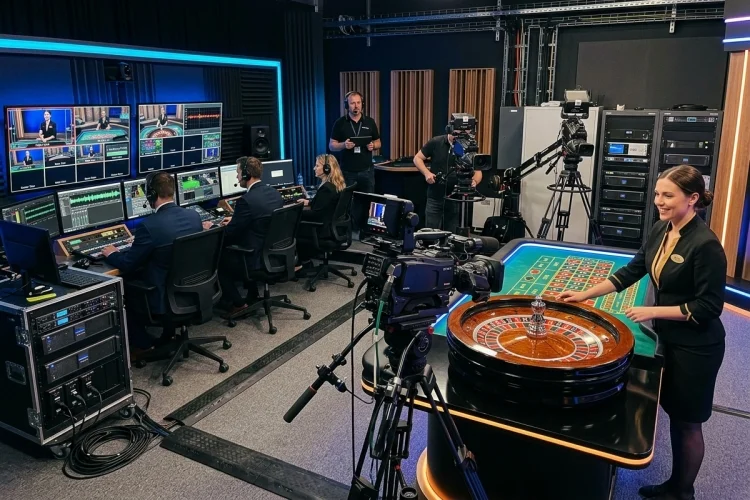
A Live Dealer Studio Is Part Casino and Part Broadcast Facility
Live dealer studios are purpose-built environments designed to run real table games while broadcasting them through online casino platforms.
They can contain dozens of blackjack, roulette, baccarat, and game-show tables inside the same building. Pragmatic Play, for example, has described its Bucharest facility as a purpose-built live casino studio that initially had capacity for 43 tables.
Playtech operates another large network of studios across locations including Latvia, Romania, Spain, Brazil, Peru, and several U.S. states.
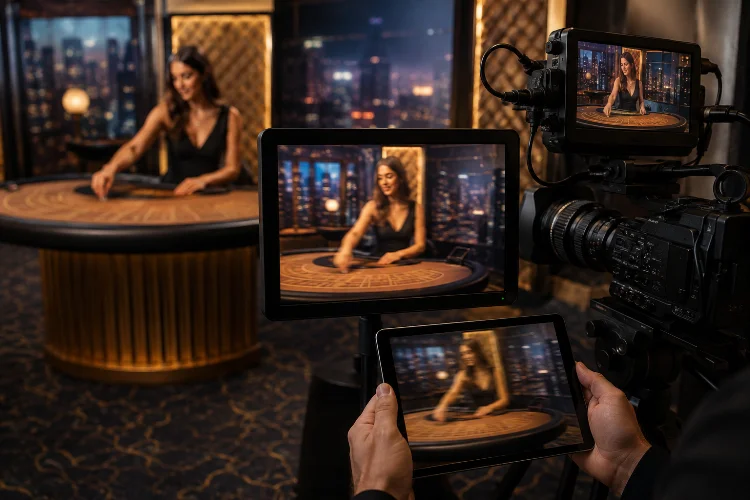
Unlike a regular casino floor, these rooms are designed around cameras, lighting, microphones, green-screen elements, digital interfaces, and controlled shooting angles.
The result is essentially a continous television broadcast where the game itself happens in real time.
What the Live Dealer Actually Does
The dealer or game presenter is the most visible part of the operation.
Depending on the game, the presenter may shuffle and deal cards, spin a roulette wheel, announce results, explain procedures, and communicate with players through the live interface.
Evolution describes its game presenters as responsible for opening the game, accepting betting periods, dealing cards or spinning the ball, announcing winners, and interacting with online players. Its studios operate around the clock.
Training is therefore about more than knowing blackjack rules.
Presenters need to perform consistently on camera, communicate clearly, follow exact dealing procedures, recognise technical instructions, and maintain the correct pace.
Regulated environments can also require documented dealer training and refresher training. The UK Gambling Commission’s live dealer standards specifically state that croupiers should receive adequate training according to documented procedures and game rules.
Cameras Turn the Table Into an Online Broadcast
A modern live dealer game usually uses several cameras rather than one static webcam.
One angle may show the dealer, another may focus closely on cards, and another may capture the roulette wheel or game equipment.
Pragmatic Play says its Live Casino setup uses advanced in-house broadcasting technology and multiple cameras capable of 4K-quality video.
These different views let the production system switch between important moments.
During blackjack, for example, the broadcast may focus on the dealer while bets are being placed and then move closer to the cards during the deal. Roulette broadcasts can provide detailed wheel views before showing the result and betting history.
Lighting is equally important. Studios are built to keep cards, chips, dealer movements, and physical equipment clearly visible without unwanted shadows or reflections.
That is why the room often looks more like a professional TV set than a normal casino.
How Physical Events Become Digital Game Data
Streaming the picture is only part of the process.
The platform must also translate what happens at the physical table into information the player’s digital interface can understand.
When a card is dealt, for example, the game system needs to associate that event with the correct hand. Roulette software needs to register the winning number and then settle relevant bets.
Different providers use their own internal systems and tecnology, so the exact implementation is not universal.
The digital interface then combines the physical live feed with software elements such as betting buttons, timers, statistics, game history, payouts, and sometimes chat.
This creates two synchronized layers: the physical game happening in the studio and the digital interface used remotely.
The synchronization has to happen quickly enough that players see a coherent game instead of disconnected video and betting information.
Why Timing and Latency Matter
A live dealer game involves real-time decisions, so network delay can become important.
Players usually have a limited betting window before the dealer closes betting and begins the next game stage.
The UK Gambling Commission’s technical standards require operators to consider situations where network speed or device performance could place customers at a disadvantage in time-critical events.
That makes latency management an important behind-the-scenes task.
Video has to be encoded, transmitted, received by the player’s device, and displayed alongside the interactive betting interface. Meanwhile, the platform must accurately track when the betting period opens and closes.
The goal is not necessarily zero latency – which is unrealistic across the internet – but predictable and properly managed timing.
A short network interruption also needs to be handled without creating uncertainty about which wagers were accepted.
Supervisors Monitor What Happens Off Camera
The dealer is not operating alone.
Regulated live studios are expected to have supervision systems that monitor dealer procedures and game integrity.
The UK Gambling Commission requires staff responsible for supervising activities as well as video surveillance covering dealer actions in sufficient detail to verify that procedures were followed.
That means several layers of staff may work around the visible gaming area.
Floor supervisors can monitor tables, while technical teams handle broadcasting equipment and software. Other personnel may deal with game integrity, security, maintenance, staffing, or operational incidents.
Game logs also play an important role.
The same UK standards call for logs to be maintained and game events to be collected into statistics that can be analysed for trends involving performance, staff, or particular gaming locations.
This creates an auditable record rather than relying purely on what viewers happened to see during the broadcast.
Why Access to the Studio Is Controlled
Live dealer equipment is part of a regulated gambling operation, so access cannot simply be open to anyone.
Cards, shoes, roulette wheels, gaming tables, broadcast systems, and other consumables need controlled handling.
UK technical standards state that secure studio areas, gambling equipment, and consumables should have appropriate access controls so only authorised staff can reach them.
Digital systems require similar protection.
The Gambling Commission’s remote security requirements apply controls to systems that record game states, transmit sensitive information, and communicate with critical gambling infrastructure. These requirements are based on relevant elements of ISO/IEC 27001:2022.
Physical security and cyber security therefore meet inside the same operation.
A live casino is not simply a webcam pointed at a table; it is a controlled production and tecnical environment.
Dedicated Studios Can Be Built for Individual Brands
Not every table has generic branding.
Providers can create dedicated studios for individual online casino operators, sometimes changing everything from the background and table design to presenters and available games.
Playtech, for example, has built dedicated studio environments containing multiple blackjack, roulette, and baccarat tables for individual partners.
Pragmatic Play has similarly created branded live environments containing exclusive baccarat and roulette tables.
This works somewhat like a television studio being re-skinned for another channel.
Behind the branded set, however, the core structure remains familiar: gaming equipment, cameras, presenters, control systems, broadcast infrastructure, supervisors, and logs.
Understanding How Live Dealer Studios Operate shows how much happens beyond the dealer visible on screen.
Each table sits inside a larger system involving professional presenters, cameras, game software, networking, supervisors, security controls, and regulatory procedures.
Next time you watch a live game, look beyond the table itself. The seamless presentation is actually the result of many seperate systems working together in real time.